The site is currently dominated by intensively farmed arable land of low ecological value, with some habitats of higher ecological value comprising species-rich hedgerows, mature and veteran trees, woodland, ponds and a watercourse associated with the River Avon Local Wildlife Site.
Ecological survey work has been undertaken over a number of years, most recently during the 2025/2026 seasons, to confirm the presence of important habitats and protected/notable species and ensure the site’s environmental value is fully understood from the outset. These include foraging and commuting bats, breeding and wintering birds (including farmland species such as skylark), badgers, reptiles and great crested newts in ponds on-site and nearby. A number of veteran trees and key ecological corridors are also present.
The proposed development will be designed in line with national and local planning policy with mitigation measures proposed to avoid and reduce ecological impacts wherever possible. This includes retaining key habitats with suitable buffers, including mature and veteran trees, hedgerows and watercourses; carefully designed lighting; and species-specific mitigation (including licensing for badgers and great crested newts where required). Biodiversity enhancements will also be delivered, including extensive planting, bird nesting bricks, bat roosting boxes, hedgehog highways and log piles.
The proposals will seek to achieve a minimum of 10% Biodiversity Net Gain through on-site habitat creation and management, aligned with local nature recovery priorities, and will include a network of aquatic features, new wildlife habitats and enhanced green infrastructure. Long-term habitat management will strengthen local wildlife networks and contribute positively to nature recovery and biodiversity in the area in the long term.
Key ecology and environmental benefits
- Retention and protection of existing hedgerows, trees (including veterans), woodland and ponds.
- Sensitive design informed by extensive ecological surveys.
- Measures to safeguard protected species, including bats, birds, badgers and great crested newts.
- Creation of new habitats and green infrastructure across the site, including an ecological enhancement area, new ponds and adoption of high value hedgerow corridors into the scheme.
- Seeking to deliver at least 10% Biodiversity Net Gains.
- Long-term habitat management aligned with local nature recovery priorities.
Extensive areas of the site will be provided as public open space with significant new planting, seeking to deliver biodiversity net gain that meets or exceeds policy requirements.
Building with Nature
Taylor Wimpey is proud to be a member of the Homes for Nature programme. This will see the installation of nesting bricks/boxes in every new home and hedgehog highways between gardens.
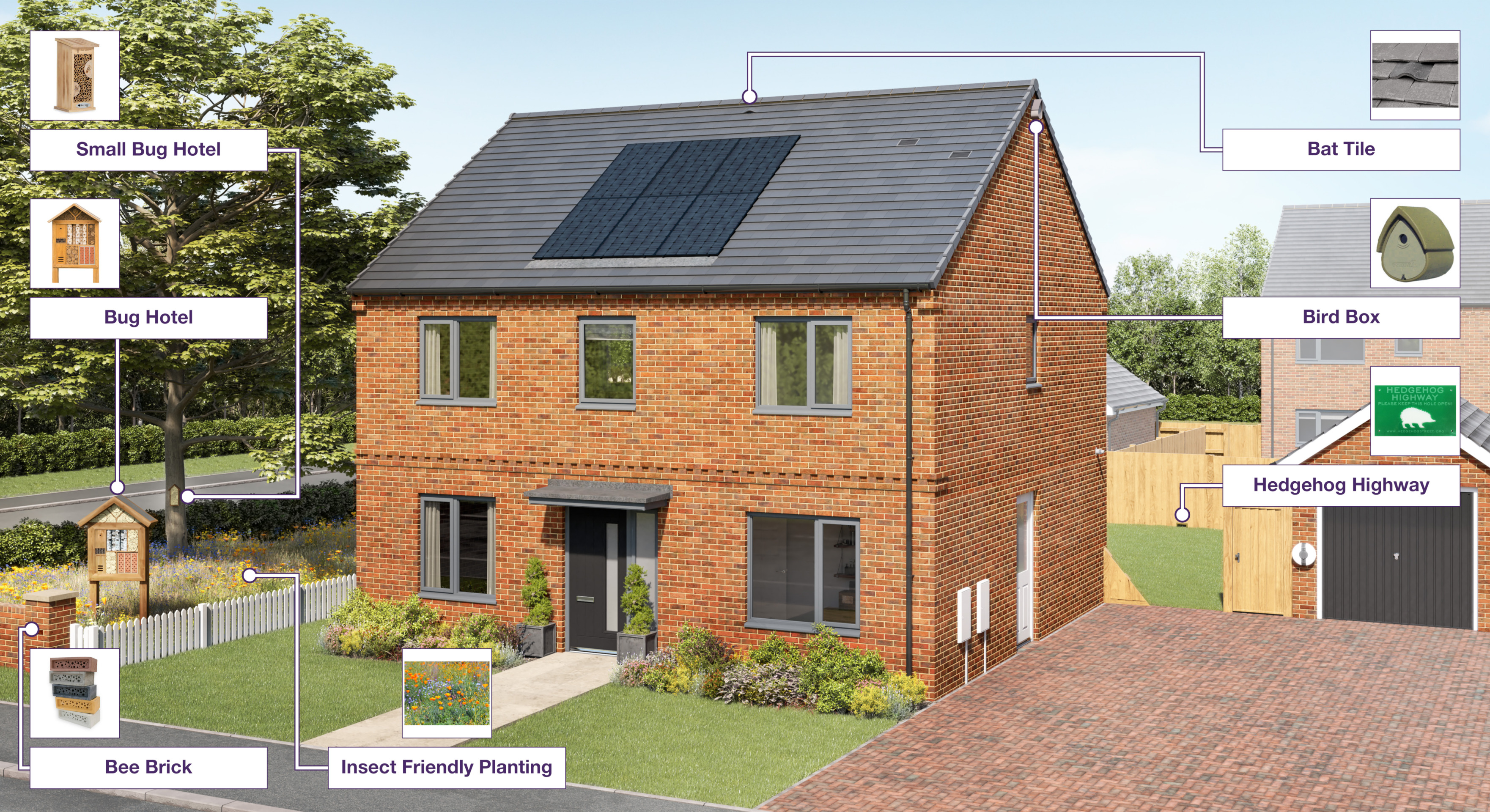
Nature interventions in a typical Taylor Wimpey home - click to enlarge